
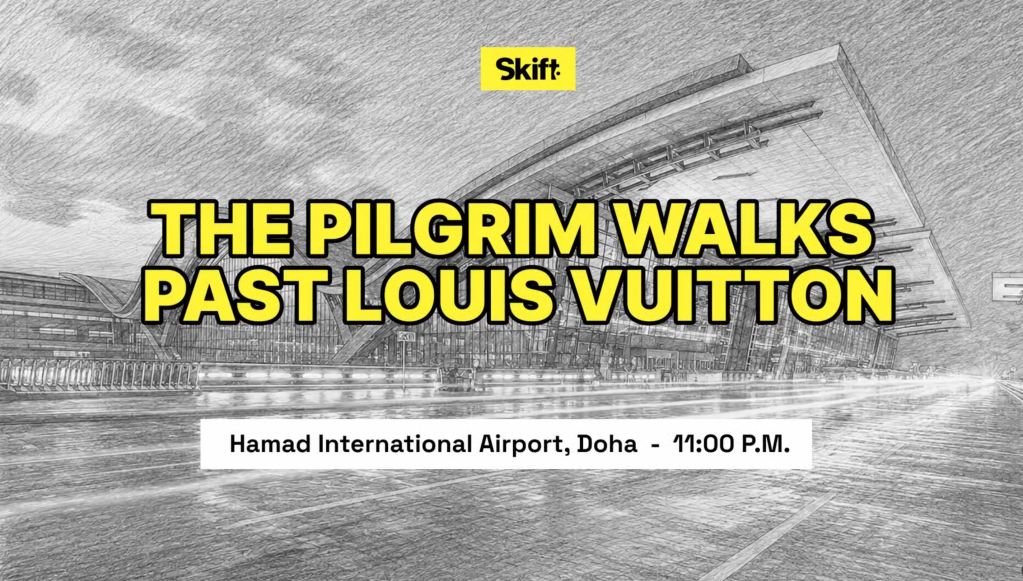
A Disorienting Commercial Stage
Skift’s recent audio essay uncovers a striking tension inside the world’s busiest air hubs: the same concourses that stage Hermès boutiques, couture displays and premium lounges also move millions of people whose needs and spending power sit far from the glossy storefronts. The piece uses karak chai — a ubiquitous, inexpensive spiced tea sold in Gulf cities — as a humanizing counterpoint to airport opulence, and a reminder of the lives passing through those terminals.
Who Walks Past The Luxury Stores?
Gulf hub airports — notably Dubai, Doha and Abu Dhabi — are global transfer magnets. They serve business travelers and high-net-worth passengers but also vast numbers of transit migrants, outbound workers, and regional families. Many of these travelers are time-pressed, budget-conscious, or traveling for work rather than leisure. The visible retail environment often caters to an entirely different demographic than the majority of people in the terminal.
Duty-free and airport retail revenues are significant for airports and brands, which explains the concentration of aspirational stores. Yet the human traffic that generates volume includes cleaners, cabin crew, contract workers, and long-haul transit passengers whose priorities are practicality, quick meals, rest, and affordability — not luxury goods.
The Power Of Spatial Storytelling
Skift’s audio format emphasizes what text alone can miss: ambient sounds, conversational pauses, and the quick transactions for street-level comforts like karak chai. Those sensory details reveal the layered economies inside airports — formal commercial contracts and informal economies, inexpensive food counters, and transient social networks.
This is not just a cultural observation. It reflects the economics of global aviation: airports must balance premium brand partnerships with essential passenger services and concessions that serve the bulk of travelers. Where the balance tips affects passenger experience, public perception, and revenue composition.
What Operators And Brands Can Learn
For airport operators and retail partners, the lesson is practical: diversify offerings to reflect passenger demographics. Luxury anchors attract headline revenue and prestige, but a functional, affordable mix of F&B, seating, prayer spaces, sleep zones, and fast retail fosters a better experience for the majority and can improve overall dwell-time spend.
For journalists and designers of public spaces, Skift’s essay is a reminder to listen as well as look. The everyday — a cup of karak, a hurried prayer, a uniformed worker on a break — tells a different story about who airports serve and why.
What This Means For You
If you’re traveling through a Gulf hub, expect a split personality: gleaming shopping façades alongside practical, low-cost services. Plan for essentials — quick food, rest, and transit options — rather than assuming airport glamour reflects available choices. If you work in airport retail or hospitality, consider product and service mixes that target the transit majority as well as premium customers.